Introduction: Rare Species Breakthroughs in 2026
Rare Species Breakthroughs are creating new hope for endangered animals, threatened plants, and fragile ecosystems in 2026. Around the world, scientists and conservation organizations are exploring advanced technologies, habitat restoration, genetic research, and community-based protection to prevent rare species from disappearing forever. These approaches may help conservation teams identify threats earlier, monitor wildlife more accurately, and protect species that are difficult to study in the wild. However, the same developments also raise important questions about cost, privacy, ecological disruption, and the long-term consequences of changing natural environments.
Rare species play an essential role in maintaining biodiversity. Some pollinate plants, others control insect populations, and many contribute to the balance of their ecosystems. When a species disappears, its loss can affect other organisms and weaken the natural systems that support human life. Although conservation efforts have achieved important successes, habitat destruction, climate change, illegal wildlife trade, invasive species, and pollution continue to threaten vulnerable populations.
The most promising Rare Species Breakthroughs combine scientific innovation with practical protection. Technology alone cannot save wildlife if forests are destroyed or local communities are excluded from conservation decisions. Understanding both the opportunities and the risks can help researchers, governments, and conservation groups develop more effective strategies for protecting Earth’s rarest species.
Table of Contents
- AI-Powered Wildlife Monitoring
- Environmental DNA Detection
- Genetic Diversity and Conservation Genomics
- Wildlife Habitat Restoration
- Wildlife Corridors and Smart Tracking
- Captive Breeding and Reintroduction
- Climate-Resilient Conservation
- Community-Based Species Protection
- Benefits and Risks of Rare Species Breakthroughs
- Future Outlook and Conclusion
1. Rare Species Breakthroughs in AI-Powered Wildlife Monitoring
Artificial intelligence is becoming an important tool in wildlife conservation. Traditional monitoring often requires researchers to spend long hours studying remote forests, mountains, wetlands, and oceans. Camera traps, drones, and acoustic sensors can collect large amounts of information, but examining every photograph or recording manually is difficult.

AI-powered wildlife monitoring can automatically identify animals in camera-trap images, recognize calls, and help researchers distinguish individual animals. A 2026 review published in iScience examined 159 studies on deep-learning applications for monitoring endangered and protected wildlife. It covered species recognition, individual identification, and animal behaviour analysis.
ScienceDirect
How Rare Species Breakthroughs Help Researchers
AI systems can help conservation teams identify where animals are appearing, estimate population changes, and detect possible threats. For example, camera traps may record a rare leopard or another elusive mammal without requiring researchers to disturb its habitat. Acoustic monitoring can also help detect species through their calls, particularly when animals are active at night or hidden by dense vegetation.
These technologies can make wildlife surveys more efficient, allowing researchers to spend more time protecting habitats and investigating important findings.
However, AI is not always accurate. Poor lighting, unusual animal positions, limited training data, and environmental changes can lead to incorrect identification. Conservation teams must verify important results before making decisions that affect endangered populations.
2. Rare Species Breakthroughs Through Environmental DNA
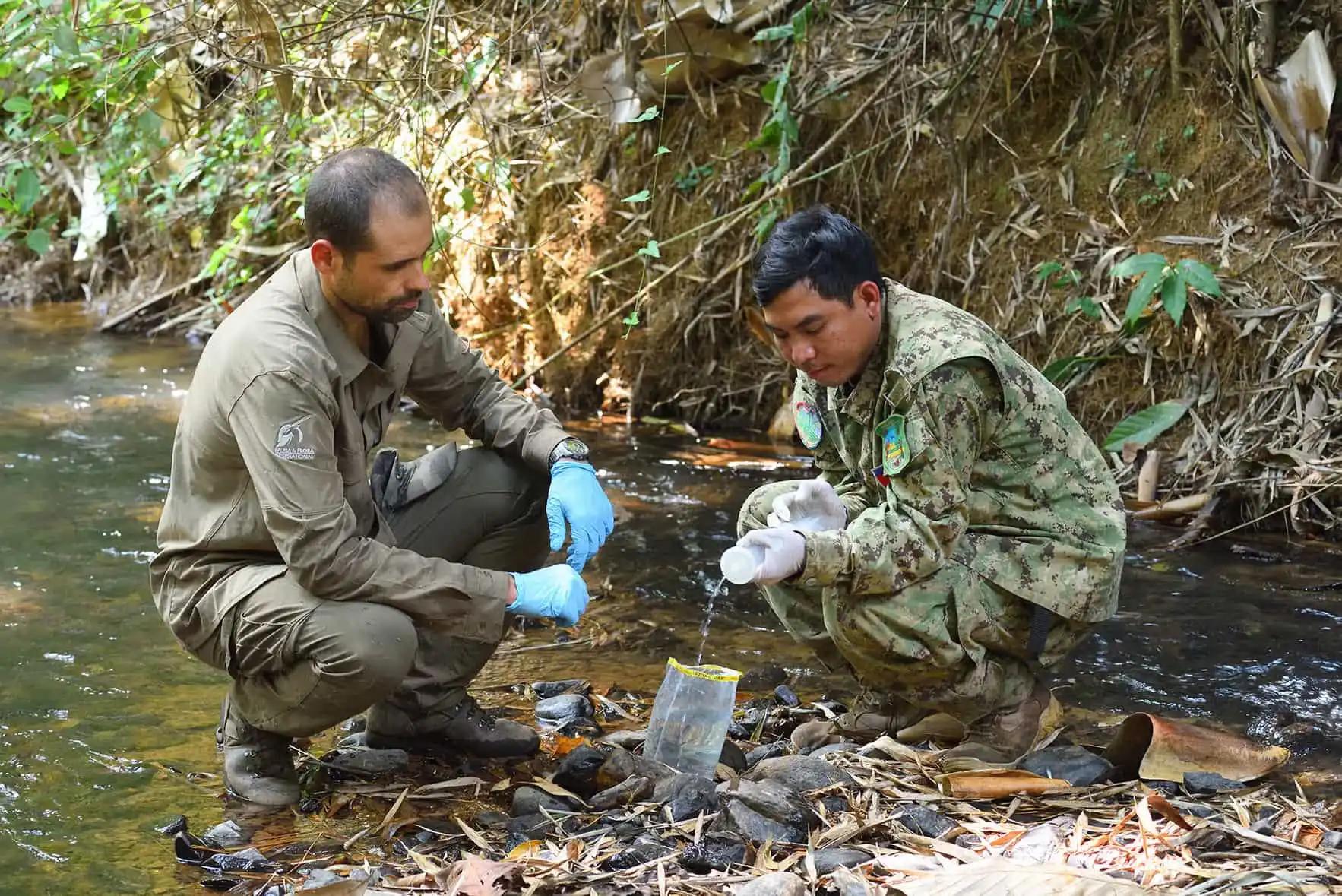
Environmental DNA, commonly known as eDNA, is one of the most promising methods for finding rare species without directly capturing or disturbing them. Animals leave genetic material in water, soil, mucus, skin cells, and other environmental samples. Scientists can collect these samples and test them for DNA associated with particular species.
Why Rare Species Breakthroughs Matter for eDNA
This approach can be particularly useful for aquatic animals, elusive amphibians, and species living in difficult-to-reach habitats. Researchers may detect evidence of an animal even when it is never seen during a traditional wildlife survey.
The International Union for Conservation of Nature explains that eDNA can complement conventional monitoring and help identify species distributions, biodiversity changes, and important habitats. It also emphasizes the need for reliable testing procedures and better DNA reference libraries.
IUCN
The technology does have limitations. DNA can move through water, degrade over time, or contaminate samples. A positive result does not necessarily prove that a healthy breeding population lives at the sampling location. Scientists therefore need careful testing and additional field observations before deciding how to protect a species.
3. Rare Species Breakthroughs in Conservation Genomics
Conservation genomics uses genetic information to understand the health, diversity, and evolutionary history of threatened populations. This research can help scientists determine whether isolated groups of animals have enough genetic diversity to survive future environmental changes.
How Rare Species Breakthroughs Support Genetic Diversity
When a population becomes very small, closely related animals may reproduce with one another more frequently. This can increase inbreeding and reduce a population’s ability to adapt to disease or environmental stress. Genetic studies help conservationists identify these risks and make informed breeding or population-management decisions.
Researchers can also use DNA analysis to clarify whether animals previously considered part of one species actually belong to distinct species. In September 2026, researchers reported identifying a genetically distinct wild cat species, Leopardus tilcayo, in Bolivia’s Yungas cloud forest. Its habitat faces threats including deforestation, fires, agriculture, and mining.
Reuters
This discovery demonstrates why identifying a species is only the beginning of conservation work. Researchers must also investigate its population, distribution, ecological needs, and threats.
Genetic interventions can be controversial, particularly when they involve moving animals between populations or editing genes. Conservation decisions should prioritize the natural ecosystem and carefully assess long-term consequences.
4. Rare Species Breakthroughs Through Wildlife Habitat Restoration
Technology cannot replace healthy habitats. Forests, wetlands, grasslands, rivers, and coral reefs provide the food, shelter, and breeding conditions that rare species need to survive.
Habitat restoration aims to repair damaged ecosystems by replanting native vegetation, restoring water flows, controlling invasive species, and reconnecting fragmented landscapes. These actions can support several threatened species simultaneously rather than focusing on only one animal.
Why Rare Species Breakthroughs Need Healthy Ecosystems
A conservation project may successfully breed endangered animals, but releasing them into a damaged habitat can lead to another population decline. Food shortages, polluted water, human activity, and insufficient shelter may prevent the animals from surviving.
Evidence from 91 African conservation projects, discussed by the IUCN in 2026, highlighted the importance of combining direct species protection, habitat management, and community involvement. The projects included habitat restoration and actions addressing immediate threats such as poaching.
IUCN
Restoration also has risks. Poorly planned projects may introduce unsuitable plants, disturb existing wildlife, or use large amounts of water. Successful restoration requires local ecological knowledge, native species, and long-term monitoring.
5. Rare Species Breakthroughs Through Wildlife Corridors and Smart Tracking
Roads, farms, settlements, and industrial development can divide natural habitats into isolated patches. When animals cannot safely move between these areas, they may struggle to find mates, food, and suitable breeding grounds.
Wildlife corridors connect separated habitats through protected strips of land, restored vegetation, wildlife crossings, or other safe routes. GPS collars and other tracking technologies help researchers understand how animals use these connections.
How Rare Species Breakthroughs Improve Wildlife Movement
Tracking data can reveal migration routes, breeding areas, and places where animals frequently encounter roads or human settlements. Conservation planners can use this information to improve crossing locations and protect important movement routes.
Smart monitoring may also help rangers respond more quickly when endangered animals enter dangerous areas. Yet tracking devices can be expensive, require maintenance, and sometimes disturb animals if poorly designed.
There is another concern: detailed location data can reveal where rare animals gather. If such information becomes publicly available, poachers could misuse it. Sensitive wildlife data should therefore be protected and shared responsibly.
6. Rare Species Breakthroughs in Captive Breeding and Reintroduction
Captive breeding can help prevent extinction when a species has very few surviving individuals or faces severe threats in the wild. Under carefully managed programmes, conservationists breed animals in protected facilities before preparing suitable individuals for release into natural habitats.
When Rare Species Breakthroughs Make Reintroduction Possible
Successful reintroduction requires more than increasing animal numbers. Animals must be healthy, capable of finding food, and prepared to avoid predators or other dangers. Their future habitat must also provide enough resources and protection.
Genetic management is important because breeding a small number of related animals can reduce diversity. Conservation teams need to balance population growth with genetic health.
Reintroduction can fail when released animals lack survival skills, disease spreads, or the original threats remain unresolved. Captive breeding should therefore complement habitat protection rather than replace it.
Researchers are also exploring de-extinction technologies that use genetic engineering to investigate or recreate selected traits of extinct animals. Such work remains scientifically and ethically challenging, and creating an organism resembling an extinct species is not the same as restoring the original species and its ecological role.
7. Rare Species Breakthroughs for Climate-Resilient Conservation
Climate change is altering temperatures, rainfall, ocean conditions, seasonal patterns, and the distribution of suitable habitats. Species that depend on narrow temperature ranges or specific breeding seasons may be particularly vulnerable.
Climate-resilient conservation identifies areas likely to remain suitable for wildlife and protects routes through which animals and plants may adapt to changing conditions.
Why Rare Species Breakthroughs Must Consider Climate
Scientists can combine climate models, satellite observations, species records, and habitat data to estimate where environmental conditions may change. Conservation planners can then protect climate refuges, restore connected landscapes, and prioritize species that have limited opportunities to move.
However, predictions are not guarantees. Models depend on the quality of available data and assumptions about future conditions. A location that appears suitable on a computer model may lack food, nesting sites, or protection from human activity.
Climate planning works best when scientists regularly update their predictions using field observations and collaborate with local conservation groups.
8. Rare Species Breakthroughs Through Community-Based Conservation
People living near wildlife habitats often have valuable knowledge about local animals, seasonal changes, and environmental threats. Community-based conservation brings residents into monitoring, habitat management, and decisions about how natural resources are used.
How Rare Species Breakthroughs Support Local Communities
Local wildlife monitors can report sightings, identify illegal activities, and help researchers understand changes in animal populations. Conservation programmes can also support livelihoods through paid ranger work, sustainable tourism, habitat restoration, and other locally appropriate opportunities.
The IUCN’s 2026 conservation findings emphasize that integrating species protection, habitat management, and community participation can strengthen long-term conservation outcomes.
IUCN SOS
Nevertheless, community involvement must be meaningful. Conservation restrictions can create hardship if local people lose access to land or resources without fair consultation or compensation. Projects should respect local rights, recognize traditional knowledge, and share benefits transparently.
When communities have a genuine role in decisions, conservation is more likely to receive lasting support.
9. Rare Species Breakthroughs: Benefits and Hidden Risks
Rare Species Breakthroughs offer powerful opportunities, but every conservation method has limitations. Modern tools can improve monitoring and help scientists make informed decisions, yet technology cannot independently solve habitat destruction, illegal hunting, pollution, and climate change.
| Conservation breakthrough | Main benefit | Hidden risk |
|---|---|---|
| AI wildlife monitoring | Faster animal identification | Incorrect predictions |
| Environmental DNA | Detects elusive species | Contamination or false conclusions |
| Conservation genomics | Supports genetic diversity | Ethical and ecological concerns |
| Habitat restoration | Rebuilds natural ecosystems | Poorly planned restoration |
| Wildlife corridors | Connects isolated populations | Unsafe or unsuitable routes |
| Captive breeding | Supports threatened populations | Low genetic diversity |
| Climate-resilient planning | Anticipates future habitat changes | Uncertain predictions |
| Community conservation | Builds local participation | Unequal sharing of benefits |
The most effective conservation strategies combine scientific evidence with direct action. AI may identify a threatened animal, but rangers still need to protect it from poaching. Genetic research may reveal a vulnerable population, but suitable habitat must remain available for its survival.
Conservation organizations should also measure outcomes instead of relying only on the number of animals monitored, trees planted, or projects launched. The most important questions are whether populations are recovering, habitats are improving, and extinction risks are declining.
10. Rare Species Breakthroughs: Future Outlook for 2026 and Beyond
The future of Rare Species Breakthroughs will depend on how well researchers combine technology, ecological knowledge, and practical conservation. AI systems may become better at recognizing unfamiliar animals, while environmental DNA could make biodiversity surveys more accessible. Improved genetic analysis may also help scientists understand small populations and prioritize protection.
One encouraging example is the rediscovery of the Bangka slow loris in Indonesia, reported in October 2026. The species had not been documented in scientific literature since the 1930s, but investigations and local observations helped reveal surviving animals. Conservationists have emphasized the urgent need to protect its remaining forest habitat.
Reuters
This case demonstrates why rare species should not be considered lost simply because researchers have not observed them for decades. Local knowledge, careful surveys, and habitat protection can uncover important opportunities for conservation.
Rare Species Breakthroughs and the Road Ahead
Future progress will require reliable funding, trained researchers, international cooperation, and stronger protection of natural habitats. Governments and conservation organizations should prioritize species facing the greatest risks while ensuring that scientific advances do not undermine animal welfare or local communities.
The goal is not simply to discover new technologies. It is to turn discoveries into measurable improvements in wildlife survival.
Conclusion: Rare Species Breakthroughs Offer Hope and Risks
Rare Species Breakthroughs show how modern science can support the protection of endangered animals and threatened plants. AI monitoring, environmental DNA, conservation genomics, habitat restoration, and community-led programmes are creating new ways to understand and address biodiversity loss.
However, no single breakthrough can guarantee a species’ survival. Poorly managed technology, insufficient funding, damaged habitats, and exclusion of local communities can undermine even promising projects.
The strongest approach combines reliable research with habitat protection, responsible technology, and long-term commitment. By acting before populations collapse, conservationists can improve the chances that rare species will continue to survive in the wild. The future of biodiversity depends not only on what science discovers, but also on how effectively people put that knowledge into action.
Graph: Rare Species Breakthroughs by Conservation Approach
The following is an illustrative comparison, not measured research data. It shows how different approaches may contribute to conservation; actual results vary by species and location.
Illustrative Conservation Priorities
Conceptual scores out of 10 for explaining the potential roles of conservation approaches, not measured effectiveness.
Captive breeding
Illustrative priority6
02.557.510Habitat protectionThreat reductionCommunity actionAI monitoringGenetic researchCaptive breeding