Introduction: Archaeological Discoveries in 2026
Archaeological Discoveries continue to reveal fascinating secrets about ancient civilizations, lost settlements, forgotten technologies, and the everyday lives of people who lived thousands of years ago. In 2026, archaeological research is benefiting from advanced imaging, artificial intelligence, satellite mapping, DNA analysis, and improved dating techniques. These technologies help researchers investigate historical mysteries that were once difficult or impossible to explore. However, many discoveries also create new questions about ancient societies, historical interpretations, cultural ownership, and the limits of scientific evidence.
Archaeology is much more than finding buried objects. It involves carefully studying buildings, tools, bones, inscriptions, pottery, and environmental remains to reconstruct the past. A small fragment of pottery or a buried structure can sometimes provide valuable information about trade, migration, food, religion, and technological development. When researchers combine different types of evidence, they can build a more reliable picture of how ancient people lived.
The most exciting Archaeological Discoveries are not always the largest or most visually impressive. Sometimes, a new analysis of an existing artifact changes what historians previously believed. Other times, modern technology reveals hidden structures beneath forests, deserts, or cities without extensive excavation. This article explores eight important areas of archaeological discovery, their potential benefits, and the hidden risks researchers must consider when investigating humanity’s past.
Table of Contents
- Archaeological Discoveries Beneath Ancient Cities
- Archaeological Discoveries Using Artificial Intelligence
- Archaeological Discoveries Through Ancient DNA
- Archaeological Discoveries of Lost Civilizations
- Archaeological Discoveries Through Underwater Exploration
- Archaeological Discoveries of Ancient Technology
- Archaeological Discoveries Through Climate and Environmental Evidence
- Archaeological Discoveries Using Advanced Imaging
- Benefits and Hidden Risks of Archaeological Research
- The Future of Archaeological Discoveries
1. Archaeological Discoveries Beneath Ancient Cities
Many ancient cities were built, destroyed, abandoned, and rebuilt over centuries. As a result, important historical evidence can remain buried beneath modern settlements or layers of earlier construction. Archaeologists investigate these layers to understand how cities developed, how people organized their communities, and why certain settlements eventually declined.

How Archaeological Discoveries Reveal Buried History
Ground-penetrating radar, magnetic surveys, and other geophysical methods allow researchers to identify possible walls, roads, foundations, and buried structures before excavation begins. These techniques can reduce unnecessary digging and help archaeologists decide where further investigation may be most useful.
A buried structure may reveal the layout of a public building, an ancient marketplace, or a residential neighbourhood. When combined with pottery, inscriptions, and other dated materials, such evidence can help researchers reconstruct urban life and identify changes in architecture and trade.
However, geophysical signals do not automatically prove that a specific building exists beneath the ground. Rocks, soil variations, modern pipes, and other objects can produce confusing results. Researchers must compare survey data with archaeological evidence before making firm conclusions.
Urban archaeology also faces pressure from construction, population growth, and infrastructure development. Protecting buried remains requires cooperation between archaeologists, local authorities, property owners, and communities.
2. Archaeological Discoveries Using Artificial Intelligence
Artificial intelligence is changing how archaeologists examine photographs, satellite images, inscriptions, and large collections of historical records. Research teams can use machine-learning systems to identify patterns that would otherwise take many hours of manual analysis.
How Archaeological Discoveries Benefit from AI
AI-assisted satellite analysis can help identify possible ancient roads, settlement patterns, agricultural features, and other landscape changes. Image-processing systems can also assist researchers studying damaged inscriptions or fragments of manuscripts.
One important example is the use of machine learning in deciphering ancient writing. Researchers have developed computational approaches to compare inscription patterns, identify possible signs, and explore relationships between languages. These methods can assist experts, although they do not guarantee a correct translation.
AI can also help organize archaeological databases by connecting artifacts that share similarities in shape, material, location, or decoration. This can reveal patterns of exchange between distant communities and guide future research.
Nevertheless, AI systems depend on the quality of their training data. If records are incomplete or certain regions are underrepresented, the results may favour well-studied civilizations and overlook less documented societies. Machine-generated interpretations must therefore be checked against historical context and physical evidence.
3. Archaeological Discoveries Through Ancient DNA
Ancient DNA research has transformed the study of human history. Genetic material recovered from human remains, animal bones, teeth, and other preserved samples can provide evidence about ancestry, migration, population relationships, and the movement of domesticated species.
How Archaeological Discoveries Explain Ancient Migration
By comparing ancient genetic samples with modern populations and other archaeological evidence, researchers can investigate how people moved across continents and interacted with neighbouring groups. These studies have helped scientists understand that human population history often involved repeated migration, mixture, and cultural exchange rather than simple, isolated lineages.
Ancient DNA can also provide clues about past diseases, diet, and relationships between humans and domesticated animals. When interpreted alongside archaeological sites and historical records, genetic findings can reveal details that artifacts alone may not explain.
However, DNA does not tell the whole story. Genetic similarity cannot independently establish a person’s language, cultural identity, beliefs, or political affiliation. Archaeologists must avoid treating genetic evidence as a complete explanation of cultural history.
There are also ethical questions surrounding the study of human remains. Researchers should consider the wishes and rights of descendant communities, follow relevant laws, and explain how samples will be collected, stored, and analyzed.
4. Archaeological Discoveries of Lost Civilizations
The term lost civilization often refers to a society whose history, settlements, or achievements were forgotten, misunderstood, or hidden beneath later developments. Archaeology continues to reveal how complex ancient communities organized agriculture, constructed cities, developed trade networks, and responded to environmental challenges.

How Archaeological Discoveries Challenge Historical Assumptions
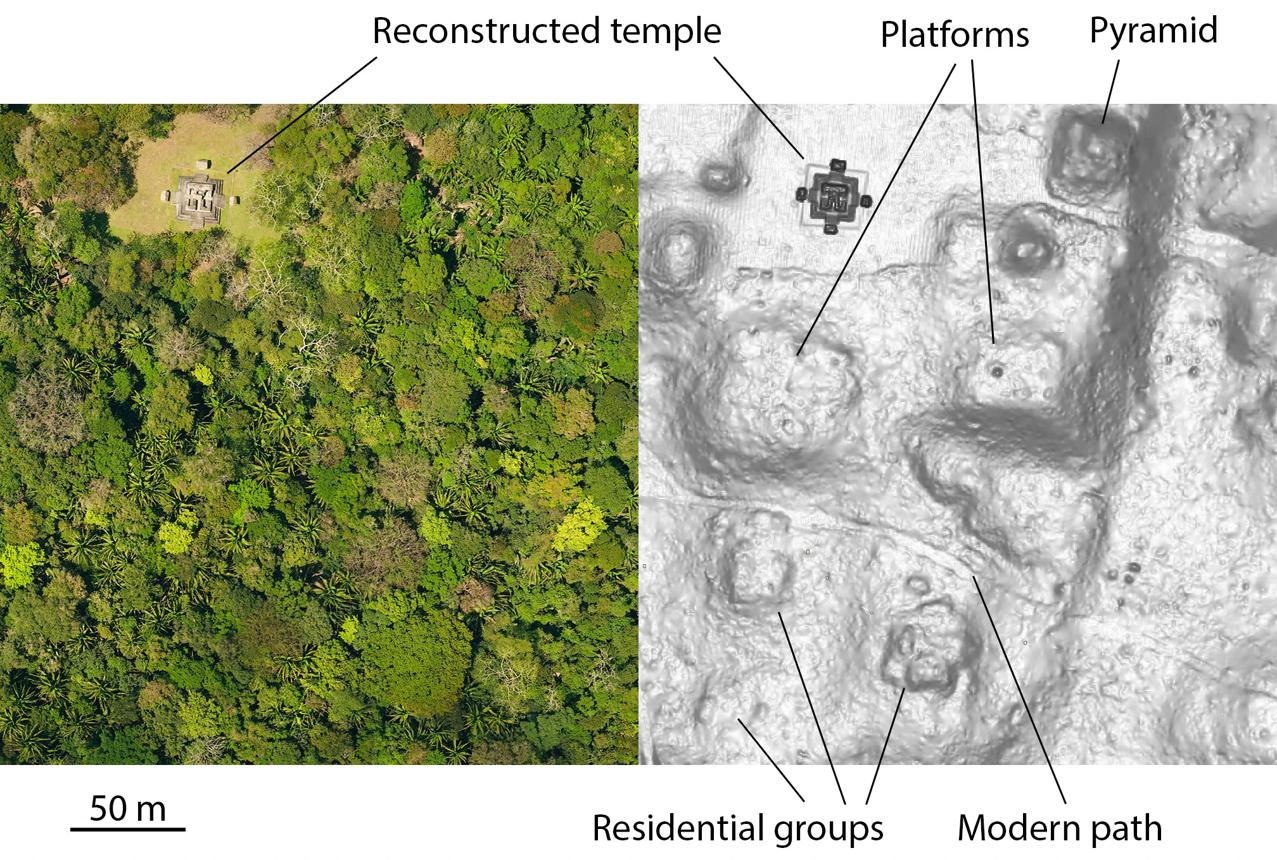
Advanced mapping and renewed fieldwork have helped researchers investigate settlements that are difficult to recognize from the ground. In parts of Central America, airborne laser scanning known as LiDAR has revealed extensive features of ancient Maya landscapes, including roads, terraces, settlements, and other signs of organized communities.
Such research has contributed to a broader understanding of how ancient Maya societies modified their environment and connected settlements. It also shows that forests can conceal extensive archaeological remains without those landscapes being empty or untouched.
Discoveries of large settlements do not automatically mean that every historical mystery has been solved. Researchers still need to establish the age, purpose, and relationship of individual structures to the wider society.
The idea of a lost civilization can also be misleading when it suggests that a people completely disappeared. In many cases, descendants of ancient societies continue to live in the region, maintain cultural traditions, and contribute important knowledge about their heritage.
5. Archaeological Discoveries Through Underwater Exploration
Oceans, rivers, and lakes contain shipwrecks, submerged settlements, harbours, and other remains of past human activity. Some sites became submerged because sea levels changed after the last Ice Age, while others were lost through coastal erosion, earthquakes, storms, or accidents at sea.
How Archaeological Discoveries Reveal Maritime History
Underwater archaeologists use sonar, remotely operated vehicles, diving equipment, and three-dimensional mapping to document submerged sites. These tools can help researchers study ancient shipping routes, trade networks, fishing practices, and the movement of people and goods.
Shipwrecks are particularly valuable because their contents may remain grouped together. Cargo, tools, pottery, and other objects can reveal where a vessel travelled and what it carried. When carefully documented, these remains can help reconstruct economic connections between distant communities.
However, underwater sites are difficult to protect. Corrosion, sediment movement, storms, and changes in water conditions can damage fragile objects. Unauthorized salvage and looting can also destroy the archaeological context that makes a discovery scientifically valuable.
Recovering an artifact without recording its location and relationship to surrounding materials may remove much of its historical significance. Responsible underwater archaeology therefore emphasizes documentation, conservation, and legal protection.
6. Archaeological Discoveries of Ancient Technology
Ancient societies developed sophisticated solutions to problems involving construction, transportation, agriculture, water management, and manufacturing. Archaeological evidence helps researchers understand how these technologies worked and how knowledge spread between communities.
How Archaeological Discoveries Reveal Engineering Skills
Ancient water systems, roads, bridges, kilns, metalworking tools, and monumental buildings demonstrate the practical knowledge of earlier societies. By examining construction materials, tool marks, wear patterns, and engineering layouts, researchers can investigate how these structures were made and maintained.
Experimental archaeology adds another layer of evidence. Researchers recreate historical tools or manufacturing processes to test whether a proposed explanation is physically possible. Such experiments can help estimate the labour, materials, and skills required to produce an ancient object.
Yet modern reconstructions cannot reproduce every historical condition. Researchers may not know the precise tools, social organization, or construction sequence used in a particular project. A successful modern experiment demonstrates possibility, not necessarily the exact method used in the past.
Ancient technologies should therefore be understood through multiple sources of evidence rather than exaggerated claims that suggest every difficult construction project involved unknown or supernatural methods.
7. Archaeological Discoveries Through Climate and Environmental Evidence
The environment has always influenced human settlement, agriculture, migration, and trade. Archaeologists study tree rings, pollen, lake sediments, cave deposits, animal remains, and other environmental records to investigate past climates and changes in landscapes.
How Archaeological Discoveries Explain Environmental Change
Environmental evidence can help researchers understand why certain settlements expanded, changed their agricultural practices, or moved to different locations. For example, pollen records may reveal changes in vegetation, while sediment layers can provide clues about floods, droughts, and erosion.
When environmental records are combined with archaeological evidence, researchers can explore how communities responded to changing rainfall, declining soil quality, or shifts in water availability. Some societies developed new irrigation systems or diversified their food sources, while others experienced greater pressure on resources.
However, environmental change rarely explains the fate of a civilization by itself. Political decisions, trade, conflict, inequality, disease, and cultural practices may also influence historical outcomes.
Researchers must therefore avoid simple explanations that attribute the collapse of an entire society to one drought or one climate event. The most reliable interpretations consider several possible causes and compare evidence from multiple locations.
8. Archaeological Discoveries Using Advanced Imaging
Some archaeological artifacts and structures are too fragile, damaged, or inaccessible for conventional examination. Advanced imaging technologies allow researchers to study their internal features and surface details without necessarily destroying or physically altering the original objects.
How Archaeological Discoveries Benefit from Modern Imaging
Computed tomography, multispectral imaging, photogrammetry, and three-dimensional scanning can reveal hidden layers, faded writing, internal construction, and details invisible to the naked eye.
Multispectral imaging uses different wavelengths of light to help distinguish markings that have faded or become difficult to read. Three-dimensional scanning creates detailed digital models that can be measured, compared, and shared with researchers around the world.
CT scanning can sometimes reveal the internal structure of sealed objects or preserved remains without opening them. These methods may help researchers examine fragile artifacts while reducing unnecessary handling.
Nevertheless, imaging results require careful interpretation. Digital enhancement can make faint features easier to see, but it can also create misleading patterns if the processing methods are poorly understood. Researchers should preserve original records, document their methods, and distinguish observed details from interpretations.
Digital copies are valuable research tools, but they do not replace the need to conserve and protect the original archaeological material.
9. Archaeological Discoveries: Benefits and Hidden Risks
Archaeological Discoveries help preserve cultural heritage, improve historical knowledge, and explain how earlier societies responded to challenges. New technologies can make research faster, reveal previously unknown sites, and help experts examine fragile objects without extensive physical intervention.
However, archaeological progress also introduces risks. Publicly revealing the exact location of a valuable site may attract looters. Poor excavation methods can destroy evidence, while inaccurate online claims can turn uncertain interpretations into supposed historical facts.
Digital technologies create additional responsibilities. Researchers must consider who owns or controls digital records, how culturally sensitive information is shared, and whether descendant communities have a meaningful role in decisions about their heritage.
The following table summarizes key research approaches and their potential limitations.
| Archaeological approach | Main benefit | Hidden risk |
|---|---|---|
| Ground surveys | Identify buried structures | Misinterpreting signals |
| Artificial intelligence | Analyze large datasets | Algorithmic errors |
| Ancient DNA | Investigate migration and ancestry | Privacy and ethical concerns |
| LiDAR mapping | Reveal hidden landscapes | Site exposure and looting |
| Underwater archaeology | Document submerged heritage | Physical damage and unauthorized salvage |
| Experimental archaeology | Test historical techniques | Overgeneralizing results |
| Environmental analysis | Understand past climate | Oversimplifying historical causes |
| Advanced imaging | Examine fragile artifacts | Misleading digital interpretation |
The best archaeological research combines modern technology with careful excavation, reliable dating, transparent analysis, and respect for cultural heritage. Discoveries become more meaningful when researchers explain what the evidence supports, what remains uncertain, and why further investigation is needed.
10. The Future of Archaeological Discoveries
The future of Archaeological Discoveries will likely involve closer collaboration between archaeologists, historians, geneticists, climate scientists, engineers, and computer specialists. New mapping tools may help identify promising research areas, while better imaging systems may reveal details within fragile artifacts and ancient structures.
Artificial intelligence could improve the organization of large collections of photographs, inscriptions, and excavation records. Ancient DNA and isotope analysis may help investigate migration, diet, and patterns of interaction between communities. Meanwhile, digital reconstruction can make archaeological sites easier to study and understand without requiring every researcher to travel to the original location.
These developments will not eliminate the need for fieldwork. Researchers must still establish context, verify dates, document the condition of artifacts, and consider alternative explanations. A possible structure detected from a satellite image is a research lead, not automatically a confirmed archaeological discovery.
The future also depends on protecting sites from urban development, conflict, environmental damage, and illegal trade. Collaboration with local and descendant communities is essential because archaeological heritage has cultural meaning beyond its scientific value.
As research methods improve, the most important discoveries may come from revisiting existing evidence with new questions rather than searching only for spectacular lost treasures.
Conclusion: Archaeological Discoveries Offer Hope and Hidden Secrets
Archaeological Discoveries continue to transform our understanding of ancient cities, human migration, lost settlements, maritime trade, historical engineering, and environmental change. AI, LiDAR, ancient DNA, underwater exploration, and advanced imaging are giving researchers new ways to investigate the past.
Yet every discovery requires careful interpretation. Scientific tools can produce errors, cultural heritage can be damaged by irresponsible excavation, and incomplete evidence can lead to exaggerated historical claims. Protecting archaeological sites and respecting the communities connected to them are as important as uncovering new information.
The greatest value of archaeology lies in its ability to connect evidence with human experience. By combining scientific innovation with responsible research, we can uncover more of humanity’s past while preserving its irreplaceable heritage for future generations.