Breakfast is the most important meal of the day. We’ve all heard it. But in our busy lives, it’s often the most rushed. We need something fast. Something healthy. And something delicious. This is where the humble oat steps into the spotlight. Oats are a global breakfast champion for a reason. They are affordable, versatile, and packed with nutrients.
For years, a warm bowl of cooked oatmeal was the standard. But recently, a new contender has taken the breakfast world by storm: overnight oats. This no-cook alternative has become a favorite for its sheer convenience and creamy texture. This leaves many of us standing in our kitchens, wondering which is truly the better choice.
Is the traditional, warm bowl of rolled oats superior? Or does the modern, chilled jar of overnight oats have the edge?
Welcome to FastFlavorz, your home for quick and delicious meal ideas. In this ultimate guide, we will break down everything you need to know about rolled oats vs. overnight oats. We will explore their nutritional differences, health benefits, and impact on your lifestyle. By the end, you’ll know exactly which option is the perfect fit for your health goals and your morning routine. Let’s settle this breakfast debate once and for all.
Understanding the Basics: What Exactly Are Rolled Oats?
Before we can compare the two methods, we must understand our core ingredient. What are rolled oats? Many people see them in the canister and don’t think twice about their origin. But their journey from the field to your bowl is what makes them so special.
Rolled oats are also known as old-fashioned oats. They are a type of lightly processed whole-grain oat. They start their life as whole oat groats. These are the intact kernels of the oat plant after the inedible hull has been removed.
From Groat to Flake: The Journey of a Rolled Oat
To become the familiar flat flakes we buy, oat groats go through a simple two-step process.
- Steaming: The groats are first steamed. This process does a few important things. It partially cooks them, which makes them quicker for you to prepare at home. It also stabilizes the healthy oils within the oats, which prevents them from going rancid and extends their shelf life.
- Rolling: After steaming, the soft and pliable groats are passed through large rollers. These rollers press them into the flat, oval-shaped flakes we recognize as rolled oats.
This process is key. It creates a larger surface area compared to a whole oat groat. This is why rolled oats cook much faster than their less-processed cousins, like steel-cut oats. Yet, they retain their shape and a pleasant, chewy texture when cooked.
The Classic Preparation: How to Cook Rolled Oats
Cooking traditional rolled oats is a simple and comforting ritual for many. The process is quick, usually taking between 5 to 10 minutes.
Stovetop Method (for a creamier texture):
- Combine 1 part rolled oats with 2 parts liquid (water, milk, or a mix).
- Add a pinch of salt to enhance the flavor.
- Bring the mixture to a boil.
- Reduce the heat and let it simmer for about 5-7 minutes.
- Stir occasionally until the oats are soft and have absorbed most of the liquid.
Microwave Method (for speed):
- In a microwave-safe bowl, combine 1 part rolled oats with 2 parts liquid.
- Microwave on high for 2-3 minutes.
- Stir well and let it sit for another minute to thicken.
The result is a warm, hearty, and satisfying breakfast. It serves as a blank canvas, ready for you to customize with your favorite toppings.
The Rise of a Breakfast Star: Introducing Overnight Oats
Now, let’s turn our attention to the trendy challenger. What are overnight oats? It’s important to clarify one thing right away. Overnight oats are not a different type of oat. They are a method of preparing oats. In fact, rolled oats are the most common type of oat used to make them.

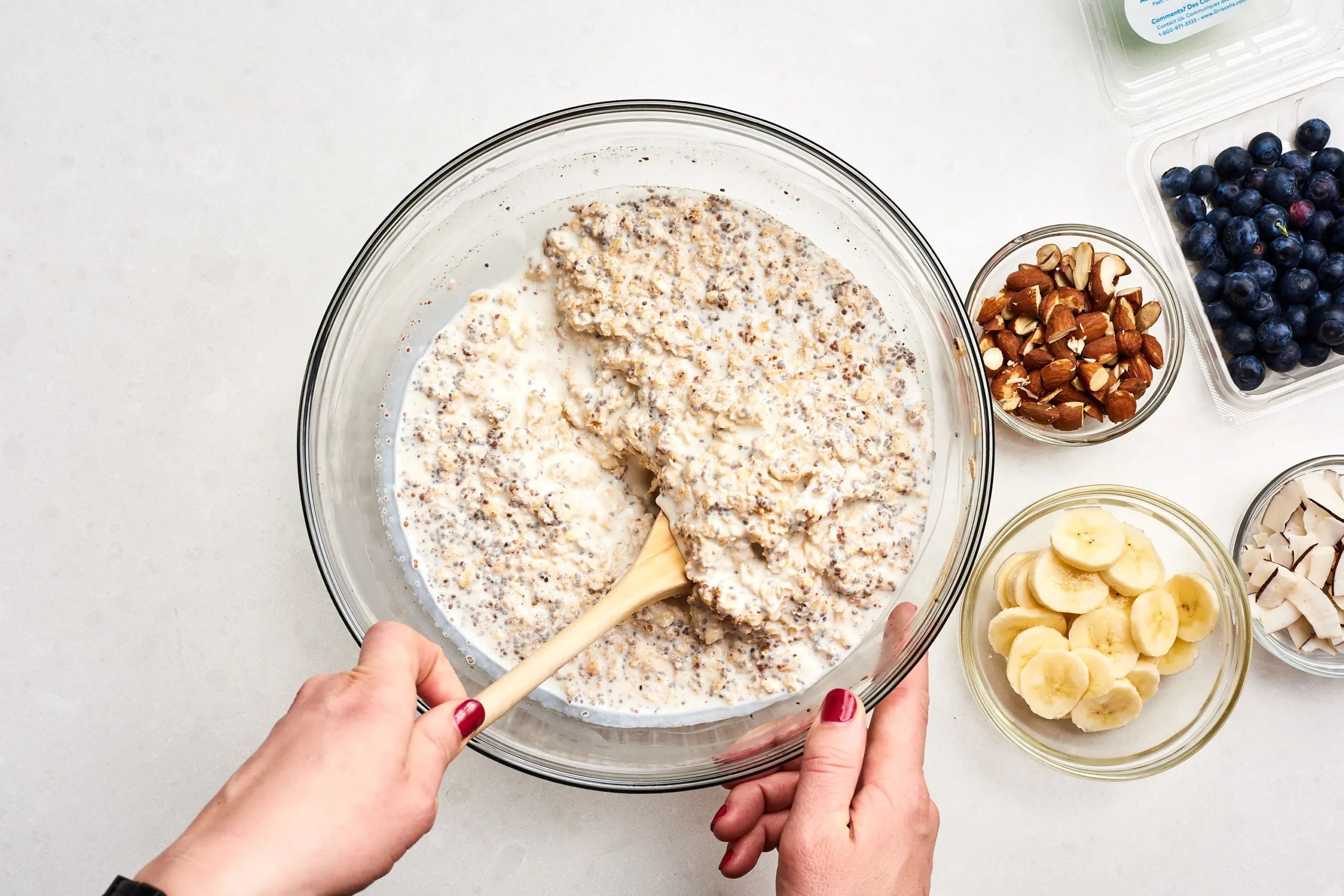
So, what is this method? Overnight oats are raw rolled oats that are soaked overnight in a liquid. There is no cooking involved. The soaking process does all the work. As the oats sit in the liquid for several hours, they absorb it. They soften and break down, resulting in a creamy, pudding-like consistency.
This preparation method has exploded in popularity. It’s a favorite among busy professionals, parents, and fitness enthusiasts. The “set it and forget it” nature of overnight oats is its biggest selling point.
The Simple “No-Cook” Method: How to Make Overnight Oats
Creating overnight oats is incredibly simple. It requires just a few minutes of prep time the night before.
The Basic Formula:
- The Container: You’ll need a jar or a container with a lid. A mason jar is a popular choice.
- The Base: Combine 1 part rolled oats with 1-2 parts liquid. The exact ratio depends on how thick you like your oats. Common liquids include dairy milk, almond milk, oat milk, coconut milk, or even yogurt.
- The Mix-ins: This is where the fun begins. You can add chia seeds (for extra thickness and omega-3s), a sweetener like maple syrup or honey, and spices like cinnamon or vanilla extract.
- The Process: Stir or shake everything together until well combined.
- The Soak: Secure the lid and place the container in the refrigerator overnight, or for at least 4-6 hours.
In the morning, your breakfast is ready to go. You can eat it straight from the jar or pour it into a bowl. Just give it a quick stir and add your favorite fresh toppings.
The Ultimate Showdown: Rolled Oats vs. Overnight Oats
Now that we understand what they are and how they are made, it’s time for the head-to-head comparison. We will analyze them based on nutrition, digestion, convenience, and taste.
Nutritional Profile: Is There a Difference?
At their core, the oats are the same. A serving of dry rolled oats contains a fantastic mix of macronutrients and micronutrients. They are an excellent source of complex carbohydrates, fiber (specifically beta-glucan), protein, and essential minerals like manganese, phosphorus, and magnesium.
So, if the starting ingredient is identical, how can there be a nutritional difference? The difference lies in the preparation method.
The Power of Resistant Starch:
The most significant nutritional difference comes down to something called resistant starch.
Resistant starch is a type of starch that is not digested in your small intestine. Instead, it passes through to your large intestine, where it acts like a prebiotic. It feeds the good bacteria in your gut.
Cooking oats (like in traditional oatmeal) breaks down these starches, making them easily digestible. However, when you soak oats raw and keep them cool, some of the starches remain “resistant.” Therefore, overnight oats contain higher levels of resistant starch than cooked rolled oats.
“Resistant starch is a fantastic tool for gut health and blood sugar management. The gentle, no-heat preparation of overnight oats helps preserve this valuable component,” says culinary nutritionist Sarah Jenkins.
Benefits of resistant starch include:
- Improved gut health by feeding beneficial gut flora.
- Increased feelings of fullness (satiety), which can aid in weight management.
- Better blood sugar control, as it doesn’t cause a rapid spike in glucose.
Winner for Nutrition: Overnight Oats (due to higher resistant starch content).
Digestion and Gut Health
Beyond resistant starch, another factor to consider is phytic acid. Oats, like all grains, seeds, and nuts, contain phytic acid. This compound can bind to minerals like iron, zinc, and calcium in your gut, potentially reducing their absorption. This is why phytic acid is sometimes called an “anti-nutrient.”
The good news is that both preparation methods help reduce phytic acid.
- Soaking (Overnight Oats): Soaking grains for several hours helps to activate enzymes that break down phytic acid. This improves your body’s ability to absorb the valuable minerals in the oats.
- Cooking (Rolled Oats): The heat from cooking also effectively reduces the phytic acid content.
Both methods are great for making the nutrients in oats more bioavailable. The long soaking time for overnight oats may give it a slight edge in phytic acid reduction, but the difference is likely minimal for most people.
Winner for Digestion: A Tie. Both methods are effective at making oats easier to digest and their minerals more accessible.
Time and Convenience
This is where a clear winner begins to emerge, depending on your lifestyle.
- Rolled Oats (Cooked): This method requires active time in the morning. You need to stand by the stove or microwave, stir, and wait for it to cook. This process takes about 5-10 minutes from start to finish. You also have a pot and a bowl to wash.
- Overnight Oats: This method shifts the time commitment. It requires 2-5 minutes of prep the night before. In the morning, there is zero active time. You simply grab the jar from the fridge, and breakfast is served. It’s the ultimate grab-and-go meal.
For anyone with a hectic morning schedule, the convenience of overnight oats is undeniable.

Winner for Convenience: Overnight Oats.
Texture and Taste
This category is entirely subjective. It comes down to personal preference.
- Rolled Oats (Cooked): When cooked, rolled oats become soft, creamy, and have a slightly chewy bite. They are served warm, making them a comforting and cozy meal, especially on a cold day. The flavor is mild and nutty.
- Overnight Oats: The texture of overnight oats is very different. They are dense, thick, and ultra-creamy, much like a pudding or a thick yogurt. They are served cold, which can be incredibly refreshing, particularly in warmer weather or after a workout.
Do you crave a warm, comforting bowl of goodness? Or do you prefer a cool, creamy, and refreshing meal? Your answer will determine your personal winner here.
Winner for Texture and Taste: Personal Preference.
Versatility and Customization
Both versions of oatmeal are incredibly versatile. They are blank canvases for a world of flavor combinations.
- Toppings for Cooked Rolled Oats: You can stir in brown sugar, maple syrup, fruits like bananas or berries, and spices while it cooks. Toppings like nuts, seeds, and fresh fruit are typically added just before serving.
- Mix-ins for Overnight Oats: This is where overnight oats truly shine. You can layer ingredients in the jar for a beautiful parfait effect. You can mix in protein powder, cocoa powder, fruit purees, and nut butters. The flavors meld together overnight, creating a more integrated taste experience.
While both are customizable, the ability to infuse flavors overnight gives a slight creative edge to the soaked version.
Winner for Versatility: A very slight edge to Overnight Oats.
Comparison Table: At a Glance
| Feature | Rolled Oats (Cooked) | Overnight Oats |
|---|---|---|
| Preparation Time | 5-10 minutes in the morning | 2-5 minutes the night before |
| Cooking Method | Heat (stovetop or microwave) | No-cook (soaking) |
| Texture | Warm, soft, slightly chewy | Cold, creamy, dense, pudding-like |
| Serving Temperature | Hot / Warm | Cold / Chilled |
| Resistant Starch | Lower content | Higher content |
| Phytic Acid | Reduced by heat | Reduced by soaking |
| Best For | Cozy mornings, comfort food | Busy schedules, grab-and-go |
Which Oat Fits Your Lifestyle?
The “better” option isn’t just about nutrition; it’s about what works for you. Let’s look at some common lifestyle goals and see which oat comes out on top.
For Weight Management and Satiety
Both are excellent choices for weight management. The high fiber content, particularly beta-glucan, in all oats helps you feel full and satisfied. This reduces the chances of overeating later in the day.
However, the higher resistant starch content in overnight oats gives them an advantage. Resistant starch promotes satiety, meaning it helps you feel fuller for longer. This can be a powerful tool in managing your appetite and overall calorie intake.
Pro-Tip: Regardless of which you choose, be mindful of your toppings. Loading your oats with excessive sugar, chocolate, or high-fat creams can easily turn a healthy meal into a calorie bomb. Stick to fresh fruits, nuts, seeds, and spices.
For the Busy Professional or Parent
For anyone juggling a demanding job, getting kids ready for school, or simply trying to maximize sleep, the morning is a race against the clock. In this scenario, overnight oats are the undisputed champion.
Having a nutritious, delicious breakfast waiting for you in the fridge is a complete game-changer. It eliminates the need to cook, make decisions, or clean up pots and pans during the morning rush. It’s the definition of a fast and flavorful breakfast, which is what we are all about here at FastFlavorz (https://freeblitz.shop/).
For Athletes and Pre/Post Workout Fuel
Oats are a favorite fuel source for athletes due to their slow-releasing complex carbs.
- Pre-Workout: A warm bowl of cooked rolled oats about 60-90 minutes before a workout can provide sustained energy. It’s gentle on the stomach and provides the fuel needed for performance.
- Post-Workout: This is where overnight oats can be fantastic. They are cool and refreshing after a tough session. They are also easily digestible, helping to replenish glycogen stores quickly. You can also easily mix in a scoop of protein powder to aid in muscle repair and recovery.
The choice here depends on timing and personal preference.
For Comfort and a Cozy Start
There are some days when all you want is a warm hug in a bowl. On cold, rainy mornings, or when you’re feeling a bit under the weather, nothing beats a warm, steaming bowl of cooked rolled oats.
The warmth is soothing, and the classic preparation feels nostalgic and comforting. While overnight oats are convenient, they can’t replicate the cozy experience of traditional oatmeal.
Get Started with FastFlavorz-Approved Recipes
Ready to try them for yourself? Here are two simple, foundational recipes to get you started.
Classic Comfort Rolled Oats Recipe
This is the perfect recipe for a slow weekend morning.
Ingredients:
- 1/2 cup rolled oats
- 1 cup milk or water
- Pinch of salt
- 1/2 teaspoon cinnamon
- 1 tablespoon maple syrup
- Toppings: Sliced banana, walnuts, and a drizzle of honey.
Instructions:
- In a small saucepan, combine the oats, milk, salt, and cinnamon.
- Bring to a simmer over medium heat.
- Cook for 5-7 minutes, stirring often, until creamy.
- Stir in the maple syrup.
- Pour into a bowl and top with banana slices, walnuts, and a final drizzle of honey.
Basic Grab-and-Go Overnight Oats Recipe
Prep this the night before a busy day for a stress-free morning.
Ingredients:
- 1/2 cup rolled oats
- 1/2 cup almond milk (or your choice of milk)
- 1/4 cup Greek yogurt (for extra creaminess and protein)
- 1 tablespoon chia seeds
- 1 tablespoon honey or maple syrup
- 1/2 teaspoon vanilla extract
- Toppings: Fresh berries and slivered almonds.
Instructions:
- In a jar or container with a lid, add the rolled oats, almond milk, Greek yogurt, chia seeds, honey, and vanilla.
- Stir very well or put the lid on and shake until everything is combined.
- Ensure all the oats are submerged in the liquid.
- Secure the lid and refrigerate for at least 6 hours, or overnight.
- In the morning, give it a stir, top with fresh berries and almonds, and enjoy!
The Verdict: So, Which One is Truly Better?
After breaking it all down, the answer to the “Rolled Oats vs. Overnight Oats” debate is clear: there is no single “better” option.
The best choice is the one that aligns with your personal preferences, health goals, and daily schedule.
Choose Overnight Oats if:
- Your mornings are extremely busy.
- You prioritize convenience and grab-and-go meals.
- You want to maximize resistant starch for gut health and satiety.
- You enjoy a cold, creamy, pudding-like texture.
Choose Cooked Rolled Oats if:
- You have a few minutes to cook in the morning.
- You crave a warm, comforting, and hearty breakfast.
- You prefer a softer, chewier texture.
- You want a cozy meal on a cold day.
The fantastic news is that both are incredibly healthy choices. You can’t go wrong with either. Why not incorporate both into your weekly routine? Enjoy warm, cooked oats on lazy weekends and rely on pre-made overnight oats for your busy weekdays. This way, you get the best of both worlds.
Quick Answers to Your Oat Questions
Here are some frequently asked questions about oats.
1. Can I use instant oats for overnight oats?
It’s not recommended. Instant oats are thinner and more processed. They will turn into a very mushy and paste-like texture when soaked overnight. Rolled oats provide the best creamy yet substantial texture.
2. Can I heat my overnight oats?
Yes, you can. You can gently warm them in the microwave for 30-60 seconds. However, be aware that heating them will reduce the amount of beneficial resistant starch.
3. How long do overnight oats last in the fridge?
Overnight oats can be stored in an airtight container in the refrigerator for up to 5 days. However, they are at their best quality and texture within the first 2-3 days.
4. Are oats naturally gluten-free?
Pure oats are naturally gluten-free. The issue is cross-contamination. They are often grown and processed in facilities that also handle wheat, barley, and rye. If you have celiac disease or a gluten sensitivity, be sure to buy oats that are certified gluten-free.
5. Which is better for people with diabetes?
Both are excellent low-glycemic index foods. However, the higher resistant starch in overnight oats may offer a slight advantage for blood sugar control. As always, it is best to consult with a doctor or registered dietitian for personalized advice.